Warning: Declaration of WPRandomPostsWidget::update($new_instance) should be compatible with WP_Widget::update($new_instance, $old_instance) in /home/aquick7/public_html/wp-content/plugins/wp-random-posts/randomposts.php on line 79
A Quick Bite
 

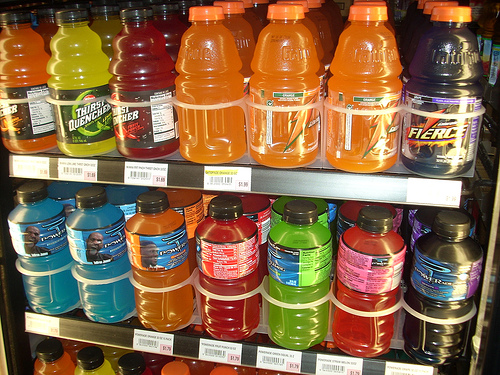
Is there any aid in Gatorade or Powerade?

Written by amy on August 9th, 2012

  Often, I am asked what brand of sports drinks, gels, energy bars, or protein bars is the best.   Regardless of the type of food product, I always answer that the best brand is the one that tastes the best to them and that settles the best in your GI tract.

Engineered sport products are more about convenience than necessity. Sports foods and fluids are not sources of “magic ingredients”, are not better digested than standard fuels, are not likely to enhance performance, are not necessary BUT they are a booming business in the food and sports industry.   In fact, the number of sports drink products is expected to grow by 33% worldwide in 2012. What more could we “need” from a beverage??

Experiment during training to see if these products are worth the money or if you would do just as well with real “sport foods”such as chocolate milk, bananas, pretzels, broth, flat soda, etc. Often, real foods taste a lot better and leave more money in your wallet!
 

Calorie confusion

Written by amy on July 18th, 2012

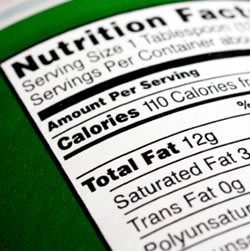
  A calorie is a measure of energy.  Calories are the energy that fuels our body, similar to the way gasoline fuels our car.

One calorie of energy is the amount of heat energy needed to raise the temperature of one gram of water by one degree Celsius.  One calorie from fat has the same amount of energy as one calorie from protein or one calorie from carbohydrate. To determine the number of calories (or energy) provided by a certain food, the food is placed in a sealed container and burned.  The amount of heat generated indicates the caloric content of the food.

Understanding the amount of calories needed by your each day and how that compares with the amount of calories you are taking in is very important in meeting your personal health goals.


What’s Amy eating?

Written by amy on July 16th, 2012

To make use of oodles of leftover shredded zucchini and sweet potato (unused from the batch of zucchini and sweet potato bread that I made today), I decided to make quesadaillas. Prior to putting the veggies  in the quesadilla, I first saueteed them until soft.  Tonight’s menu:

Quesadilla made with colby jack cheese, black beans, shredded sweet potato, shredded zucchini, chopped tomatoes – served with salsa, homemade guacamole, and chopped lettuce

Fresh mango


What’s Amy eating?

Written by amy on July 10th, 2012

We had a mess of people over for dinner tonight so the menu was  a little large.  To cut down the menu and keep it nutritionally balanced, remove one of the two starches we served at dinner – either the potatoes or the corn salad.


BBQ chicken breasts, grilled

Grilled red potatoes (my new favorite way to eat potatoes – cut in half, boil in water until just tender, skewer, and grill ~10 minutes)

Charred corn, basil, and tomato salad ( from Bon Appetit – basically, grill husked corn on the cob, cut off the kernels, and then toss with fresh basil, fresh thyme, olive oil, cherry tomatoes, and lime juice)

Green salad of red leaf lettuce, sliced turnips, beets, carrots, radish, and yellow bell pepper

Sliced watermelon and cherries

Key lime pie


4 Tips for Picky Vegetable Eaters

Written by amy on July 3rd, 2012

1. Tempt the senses.  Vegetable by itself might not be very appealing but add a little something to it and your child may be more likely to
try it.  Steamed cauliflower – boring.  Steamed cauliflower topped with melted shredded cheese – more appealing.  Strawberries – boring.
Strawberries with a small bowl of melted chocolate chips for dipping – more appealing.

2. Be a good role model. Make sure your child sees you enjoying fruits and vegetables often at meals and snacks throughout the day.  Showing
them how to eat healthier can be a lot less stressful than lecturing them about being a healthy eater.

3. Offer them a choice.  Letting them have a say in what fruit or vegetable is served can often increase their acceptance.  Do you want
watermelon or strawberries or both?  Do you want carrots or broccoli or both?

4. Offer foods over and over again. Don’t take one “I don’t like it” as proof that they don’t like a food.  The first response to a new food,
regardless of what it is, is often “no” for many kids. Try the same food in different ways.  For example, a potato can be baked, mashed, roasted,
shredded, and more.


Beet up on your competition?

Written by amy on June 26th, 2012

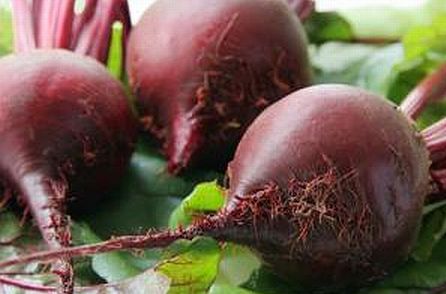
 At the Tour de France in 2011, beetroot juice made its large scale debut as a potential legal performance enhancing supplement.  Initial studies
do suggest that beetroot, also know as the garden beet, may improve performance by delaying the time it takes to fatigue. Should you be
drinking it?

In 2010, researchers at Peninsula Medical School in the United Kingdom found that cycling performance improved by 16% when cyclist consumed a
glass of beet juice a day.  Similar results have been found in other studies, such as one at St. Louis University in which researchers found
that eating a little less than a cup of baked beets an hour before running improved speed slightly.

The mechanism behind this potential benefit may lie in the high nitrate content of the beet.  Nitrate widens blood vessels in the body, allowing
blood to flow more easily.  It is suggested that eating nitrate before exercising may reduce the VO2 max (amount of oxygen needed) and
increase muscle efficiency.  Further studies are now being conducted to see if beetroot juice could be useful beyond athletics, such as in the
treatment of high blood pressure.

At this time, it is best to use caution pending more studies.  All of the studies conducted thus far have included only a small number of
subjects.  Furthermore, doses used in these studies provided almost twice as much nitrate as deemed the acceptable daily level of nitrate by
the World Health Organization.


What’s Amy eating?

Written by amy on June 17th, 2012
Father’s Day in my house means that the carnivore wins. Big steak for dinner.  I, being of the non-carnivorous variety, chose big portabello mushroom for dinner and added a handful of almonds on the side for some protein.  Here was tonight’s menu:

Grilled NY Sirloin steak (or grilled portabello, see above)

Salad of beets (steamed in tin foil for 75 minutes, skin rubbed off with paper towel, and then sliced), sliced yellow cherry tomatoes, sliced large red tomatoes, ¼ cup fresh cilantro leaves, ¼ cup feta, and drizzle of extra virgin olive oil.

Corn on the cob

Broccoli salad (crisp-steamed broccoli tossed with bell peppers, red onions, and vinaigrette)

Blackberry skillet cake with homemade ice cream


What’s Amy eating?

Written by amy on June 7th, 2012

Sauteed maple soy tofu

Sesame Broccolini and carrots (steam vegetables and then drizzle with toasted sesame oil and sesame seeds)

Soba noodles

Vanilla ice cream with sliced strawberries


What’s Amy eating?

Written by amy on June 4th, 2012

My husband was in charge of dinner tonight.  To preface his dinner choices, let me say that when I first met him, the only vegetable he ate was salsa.

Grilled chicken breast

Pierogies with sauteed garlic and cherry tomatoes

Steamed broccoli

Applesauce


What’s Amy eating?

Written by amy on May 29th, 2012

Tonight was one of those “dinner has to be ready quick” nights.  To try and make things a little easier, I made this tortellini salad the night before.

Cheese tortellini salad (made with chopped red and yellow bell peppers, cherry tomatoes, corn, sugar snap peas, and shredded carrots) with red wine vinegarette dressing and served atop baby spinach

Sliced strawberries

Vanilla ice cream