
Bruschetta grilled cheese (mixture of tomato, basil, garlic, and olive oil added to standard grilled cheese)
Roasted parsnips and sweet potatoes (Cook chopped parsnips in boiling water for three minutes. Then transfer to a bowl and add chopped sweet potatoes, olive oil, salt, and pepper. Toss to coat. Spread in single layer on pan and cook at 425 until tender and slightly crisped)
Green salad
Sliced pears
What’s Amy eating?
Written by amy on November 10th, 2011Crackers
Written by amy on November 1st, 2011The grocery store can be confusing and exhausting these days, particularly when straying from the produce department or the health-conscious co-op. To help navigate the aisles, I’ll give you my pick each week on a different type of food that might be purchased in a standard grocery store. Keep in mind, a healthy diet is based predominantly on whole, natural foods. My pick is your best bet among brand-name products, not necessarily the best thing to eat. Also, review the ingredients list periodically on these foods because brands frequently change their recipes without notification.
Amy’s picks from crackers:
Wasa Hearty or Whole Grain
Melba Snacks, Whole Grain variety
Wild Harvest Organic Stoneground Wheat
Nabisco Triscuit, Hint of Salt
Kashi, Heart to Heart
Why: The vast majority of crackers available in your basic grocery store are nutritional duds. To find the best of the worst, compare the sodium, fiber, and trans fat content. Choose a cracker that is among the lowest in sodium, the highest in fiber, and does not contain “partially hydrogenated oils” in the ingredients list. Keep serving sizes in mind when making comparisons across brands. You should also look for a whole grain (which provides the fiber among other nutrients) as the first ingredient. Ritz “whole grain” crackers , for example, claim to contain whole grains yet the first ingredient is an enriched fiber (a.k.a. not a whole grain).
What’s Amy eating?
Written by amy on October 26th, 2011Don’t you just love that look on your kid’s face when, after they take a skeptical, teeeeeensy bite of something, they realize that the bite actually tasted good? And then they go back for a second ever so slightly bigger bite, still not really believing that they might enjoy this food. It takes a third normal size bite before they shrug their shoulders and eat the rest. This happened tonight with the butternut squash puree. The apples do a nice job of sweetening the dish, particularly when you choose a sweet variety such as Gala, McIntosh, or Macoun.
Tonight’s menu:
Salmon topped with cranberry mustard and then grilled
Steamed broccoli
Butternut Squash and Apple Puree
Popcorn
What’s Amy eating?
Written by amy on October 19th, 2011The kids hit “play” on the remote and simultaneously started the 1956 short film, The Red Balloon, and, my 30 minute window to get dinner started. As crucial minutes ticked away, I ran through dinner ideas in my head. Glancing up at the TV screen, I caught the scene where the little boy runs down the street clutching the big red balloon. Bam. Tomato soup for dinner.
Homemade tomato soup (heat 2 tbsp butter, 2 tbsp olive oil, 1/4 cup flour, and 3 tbsp tomato paste on medium-low for 1 minute. add 7 cups canned tomatoes (or 2 x 28 oz. cans), 3 1/2 cups broth, 2 sprigs of thyme and cook ~30 minutes. Puree and serve)
Grilled cheese
Green salad of spinach, carrots, and sunflower seeds
Cubed mango over a scoop of vanilla ice cream
Give your breads a nutritional bump
Written by amy on October 18th, 2011 Zucchini bread, banana bread, pumpkin bread – a great way to add some fruits and vegetables to your child’s diet? Think again. Unforutnately, these well-intentioned quick breads (or muffins for that matter) tend to provide more sugar and flour bite for bite than actual fruit or vegetable. The good news is that it only takes a little tweak here and there to boost the nutrient content of these baked goods. Here are a few changes you can apply to standard recipes for baked goods.
1. Substitute up to half the quantity of white flour with whole wheat flour or substitute all of the white flour with whole wheat pastry flour.
2. The sugar quantity can usually be dropped in half. Try adding vanilla, nutmeg or cinnamon to intensify the sweetness.
3. Replace half of the butter or oil with applesauce, prune puree, or canned pumpkin.
4. Experiment with egg substitutions. You can replace a whole egg with 2 egg whites. You can also use flax meal as an egg replacement. For every egg, use 1 Tbsp flax seed meal and 3 Tbsp water. Whisk together and let sit for about 5 minutes. The mixture will get runny, like eggs.
5. Add additional ingredients, such as nuts, seeds, or dried fruit.
Tub Margarine/Butter
Written by amy on October 17th, 2011The grocery store can be confusing and exhausting these days, particularly when straying from the produce department or the health-conscious co-op. To help navigate the aisles, I’ll give you my pick each week on a different type of food that might be purchased in a standard grocery store. Keep in mind, a healthy diet is based predominantly on whole, natural foods. My pick is your best bet among brand-name products, not necessarily the best thing to eat. Also, review the ingredients list periodically on these foods because brands frequently change their recipes without notification.
Amy’s picks from tub butters/margarines:
Smart Balance Omega Light, Smart Balance HeartRight Light, and Smart Balance Light
Olivio Light, and Olivio
I Can’t Believe It’s Not Butter! Fat Free
Promise Fat Free, Promise Light, Promise active Light
Why: Tub butters and margarines can wallop you with heart-damaging saturated and trans fats. So, when choosing a tub spread, you want to pick on one without trans fat and that is low in saturated fat. The
saturated fat content can be found on the food label. The food label will also report the trans fat content but you can’t rely on this information. The Food and Drug Administration allows a label to say “0 grams” if it contains less than 0.5 grams of trans fat per serving. Read the ingredients list to make sure there isn’t any “partially hydrogenated” oil in the spread. That is the way to find out if the spread is free from added trans fat.
What’s Amy eating?
Written by amy on October 14th, 2011Tonight was my seven-year-old’s pick for dinner. Not surprisingly, she chose grilled cheese with pesto. The child loves pesto. Every year when I harvest all the remaining basil from the garden for my pesto-making rampage, I find her sneaking spoonful after spoonful out of the bowl. I’m not talking teaspoonfuls either – big honking serving spoon scoops. Picture streams of green pesto dripping down the sides of her mouth as she looks up at me with one of those wide-eyed “What?” looks. And then she always begs to lick the bowl afterwards as if it were cookie dough I were making. That’s love, man.
*As freakish as I may find her love for pesto, I will admit that it has proved useful for expanding her food repertoire with food chaining. Those of you unaware of food chainings, let me know – its a great technique for picky eaters
Here was tonight’s menu:
Grilled cheese with pesto, tomatoes, capers, and mozzarella
Roasted sweet potatoes and parsnips
Steamed broccoli
Sliced pears and apples
What’s Amy eating?
Written by amy on October 5th, 2011Some days its just hard to leave the playground.
Here’s the “20 minutes” to dinner menu:
Hominy Chili served with shredded cheese and plain Greek yogurt
Tortilla Crisps (cut soft tortillas into wedges, spray with olive oil and bake on cookie sheet at 425 degrees until crisp)
Steamed cauliflower
Sliced apples and pears
Release the beast – tempeh, that is
Written by amy on October 4th, 2011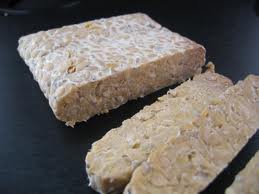 Soy is a nutritional beast. It delivers as much protein as meat without the cholesterol, is low in sodium and saturated fat and is high in fiber, calcium, and probiotics. Recent studies have even found that soy is associated with a reduced risk of heart disease and certain cancers. Unfortunately, many people trying to reap these health benefits from soy have been unable to get over the peculiar consistency of the typical soy-based food, tofu. Tempeh may be the answer.
Tempeh is made from fermented soybeans. In contrast to tofu, which is made from soymilk, the whole soybean is used for tempeh, giving it a firmer texture. The taste has been described as nutty, mushroom-like, or earthy.
This taste and texture combine to make a comparable substitute for meat. It can be used in chili, and stews or cut into stripes and stirfried with vegetables. Mix tempeh cubes with celery, bell peppers, scallions, mayo, lemon juice, and parsley to make a tempeh “chicken” salad sandwich. Grate tempeh with a cheese grater and use as meat replacement for tacos.
Bring the beast home to your house for dinner tonight!
These recipes have made it successfully past the lips of my uber-stubborn kindergartener and If-It-Moos-I’ll-Eat-It” husband.
Marinated Tempeh Stir-Fry with Broccoli and Red Bell Pepper
What’s Amy eating?
Written by amy on October 2nd, 2011I grew up in a “you-can’t-leave-the-table-until-you-eat-your-vegetables” household. This wasn’t often a problem for me – unless beets were being served. To me, that was the vegetable, the worse tasting, most gag-worthy vegetable ever. I used to hide the beets in a glass of milk to avoid eating them. Anyone who has ever eaten beets should quickly realizes the error of my thinking. White milk does not make a good hiding place for bright red juicy beets. What ultimately happened was that my parents outsmarted me, making me drink the milk (now warm after sitting out for so long while I argued with my parents about the disappearance of my beets) and then eat the beet chunks that miraculously appeared at the bottom of the glass. The beets tasted even worse by this point after soaking in the milk. That was me. Conniving -yes. Sharpest tool in the shed – no.
The first time I ever enjoyed the taste of beets was at The Fireplace, a restaurant in Boston. A beet reduction sauce had been artfully swirled below some sauteed greens and salmon filet and to my surprise, it was fantastic. Let me say that again – fantastic. That dish was what prompted me to plant beets in the garden this year and now has me swimming in beets (see Sept 18th “What’s Amy eating?”). Kinda like the little beet-cubes that used to be swimming around in my glass of milk.
In an attempt to recreate that fantastic meal for some equally fantastic friends, I made this for dinner tonight:
Grilled Salmon topped with fresh golden and red beet salad and served with a beet reduction sauce (to make sauce: simmer 1/3 cup beet juice, 3 tbsp red wine vinegar, and 3 tbsp red wine until thickened to a glaze, around 10-15 minutes) (to make salad: thinly slice 1 golden and 1 red beet; toss with olive oil, red wine vinegar, and tarragon)
Swiss Chard sauteed with garlic in olive oil
Mashed Potatoes
Apple and Raspberry Crisp with oat topping