Warning: Declaration of WPRandomPostsWidget::update($new_instance) should be compatible with WP_Widget::update($new_instance, $old_instance) in /home/aquick7/public_html/wp-content/plugins/wp-random-posts/randomposts.php on line 79
A Quick Bite
 

Getting juiced

Written by amy on January 4th, 2012

  In the spirit of Jamie Oliver’s Food Revolution, it’s time for a “did you know” about orange juice. Have you ever wondered how orange juice that according to the label is “fresh squeezed”, “100% pure” and “not from concentrate” can taste exactly the same bottle to bottle?  Certainly no two oranges have the same consistent taste. Turns out, that consistent flavor in most commercial orange juice is the result of a “secret flavor packet” that is not required by law to be listed on the label.

The making of orange juice goes more or less like this:  Once picked, oranges are shipped to be processed, i.e. squeezed and the juice pasteurized.  Then, the juice is either turned into frozen concentrate or put into storage tanks where it is held for up to a year.  During this time, much of the flavor and aroma is lost.  Therefore, when the juice leaves the storage tanks, manufacturers add a flavor pack before bottling, which is derived from orange byproducts.  Many premium orange juice brands, including Tropicana, Minute Maid, Simply Natural, and Florida Natural, have been using these packets for years to createtheir brand’s unique and consistent taste.

And now, I dub thee an informed consumer.


Is acetaminophen the chicken or the egg?

Written by amy on December 20th, 2011

The incidence of childhood asthma has been on a sharp rise over the past thirty years and a new paper published in the journal Pediatrics has turned attention to acetaminophen as a possible culprit. Researchers first began looking at acetaminophen in relation to asthma when the increase in asthma was noted to coincide with the time when researchers found that aspirin was linked to Reye’s syndrome and doctors thus began recommending acetaminophen to their patients.  In this recent paper, multiple studies are mentioned which all found an increased risk of asthma among children who had taken acetaminophen.  The author suggests
that acetaminophen drives or worsens asthma due to the medications effect on glutathione.  Glutathione is an enzyme that helps repair damage in the airways, lessening inflammation. Acetaminophen reduces the body’s level of this enzyme.

Despite the suggestive evidence, researchers still caution against pointing fingers at acetaminophen.  It remains difficult to determine if acetaminophen itself is responsible or if there are other factors at play.  For example, the medicine is taken for a fever and fevers are often caused by viral infections which have also been shown to be associated with the development of asthma.  So was it the viral infection or
the acetaminophen or something entirely different?

Bottom line: Be aware of this suggested associated and watch for future findings.  Until then, discuss with your physician if ibuprofen would be an acceptable alternative, particularly if your child has asthma or is at an increased risk for asthma.  For parents that choose to continue to use acetaminophen, experts suggest using it sparingly and as directed.  Acetaminophen is intended for very high fevers and major pain relief, not for minor aches or pain preventative measures such as when having an immunization.


Get thee some roughage small child

Written by amy on December 14th, 2011

 Fiber, sometimes referred to as roughage, is the indigestible portion of a plant that gives it its structure. The fiber content of a plant will decrease as the plant’s original shape is broken down, such as by cooking or processing.  For example, a whole apple provides 2.4 grams of fiber, applesauce 1.2 grams, and apple juice 0 grams.  Animal-based foods do not contain fiber.  Any foods made from animal products and claiming  to contain fiber, such as Fiber One® Yogurt, contain artificially added fiber.  These fiber additives will not necessarily produce the same health benefits.

The fact that the human body lacks the ability to breakdown fiber, allowing it free to pass through the entire length of the GI tract, is one of the reasons for fiber’s importance in nutrition and health. Adequate
fiber each day will promote normal bowel movements and prevent constipation.  As a general rule, adults need 25-30 grams of fiber per day.  To determine the daily recommended fiber intake for kids, take their age and add 5.

In addition to fiber, the other 3 “F’s” that play a role in normal bowel movements are:

Fluid – Drink plenty of fluid each day, the majority of which being water.

Fitness – Daily physical activity and movement, particularly after a meal, can help the digestion process.

Feedback – Moving things through the large intestine towards the light, so to speak, involves complex communication between involuntary and voluntary muscles.  Different actions, such as responding promptly
to the body’s cues and relaxing in the moment, will positive biofeedback to these muscles and facilitate successful communication.


What’s Amy eating?

Written by amy on December 7th, 2011

Here was tonight’s dinner menu:

Grilled salmon (and yes, my children dipped it in ketchup)

Steamed brussels sprouts (and yes, my husband attempted to adulterate with oodles of butter)

Cranberry relish

Mashed potatoes (have I already mentioned my husband?)

Chocolate chip cookies (and yes, I caught myself before grabbing that second cookie just because it tasted sooo good)


How could the Brits vote these the 5th most hated vegetable in 2002??

Written by amy on December 7th, 2011

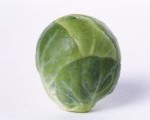
 Named after the capital of Belgium, Brussels sprouts have a nutrient density that earns them a ranking in the “Vegetable Hall of Fame.”  This cruciferous vegetable is a good source of  over 12 different nutrients, including folate, vitamin K and vitamin C.  Best of all, they are in season!

When purchasing, choose sprouts that are firm and compact.  It is also a good idea to choose ones similar in size to ensure even cooking.  You can gently remove any brown or wilted exterior leaves prior to storing but do not
wash the sprouts until ready to use.  Brussels sprouts will last for up to 2 weeks in the refrigerator when loosely wrapped in a paper towel or plastic bag.  Prepare sprouts by trimming the stem, cutting a cross into the base of each sprout, and giving a good rinse.

Now, for the important part – how to cook them. The trick to good Brussels sprouts is to not overcook them.  Cooking them too long results in an unpleasant sulfur smell and strong flavor.  Properly cooked Brussels sprouts
should still be slightly firm and dense. Check for doneness by inserting a knife into the stem.  Brussels sprouts are done with the stem is barely tender.

Roasted Brussels Sprouts: Cut 1 pounds of Brussels sprouts in half and place cut side up on a rimmed baking sheet. Drizzle with canola oil and season with salt and pepper to taste.  Bake at 400 degrees for 25 to 30
minutes.  For a variation on this recipe, add some shallots to the roasting pan and toss with a little maple syrup.

Steamed Brussels Sprouts:Quarter 1 pound of Brussels sprouts and steam until tender, approximately three minutes. Season as desired with salt and pepper and serve.  For a variation on this recipe, create a dressing of 2 cloves fresh minced garlic, 3 Tbsp extra virgin olive oil, 2 tsp lemon juice, and salt and pepper to taste.  Once Brussels sprouts are tender, toss with dressing and serve.

Brussels Sprouts with Sautéed Onions and Almonds: Steam
1 pound of fresh Brussels sprouts for approximately 3 minutes or just tender.  While they are cooking, heat 2 Tbsp of butter in a large sauté pan on medium heat.  Add the onions and cook until translucent, about 4-5  minutes. Add brussel sprouts and 1 Tbsp more butter.  Increase the heat to medium high and cook for a few more minutes, taking care not to overcook.  Add salt and pepper to taste.  Remove pan from heat, stir in 1 tsp lemon juice and ¼ cup toasted slivered almonds.  (source: SimplyRecipes)

Pan-Browned Brussels Sprouts: Halve ½ pound of Brussels sprouts lengthwise. In a heavy skillet, melt 1 Tbsp butter with 1 Tbsp olive oil over medium heat.  Add 2 cloves of garlic, slivered, and stir until fragrant.  Transfer garlic to a small bowl.  Reduce heat to low and add sprouts to skillet, cut sides down, in one layer.  Sprinkle sprouts with 2 Tbsp pine nuts and salt to taste.  Cook sprouts, until just tender and undersides are golden brown, about 15 minutes.  Transfer sprouts to a plate, browned sides up.  Add garlic and remaining ½ Tbsp butter to skillet.  Cook over medium heat about one minute, stirring, until pine nuts are pale golden.  Spoon mixture over sprouts and sprinkle with pepper to taste. (source: Epicurous)

What is your family’s favorite way to enjoy these green nuggets of goodness?

 

Cooking with…..children

Written by amy on December 1st, 2011

 According to a recent study conducted by Mintel, a market research group, only 6% of Americans aged 17-34 had any substantial cooking skills, even among the 25% that “loved cooking.” These statistics illustrate the growing trend away from home cooking and towards pre-made convenience foods and dining out.  This trend was born in part from necessity as parents faced schedules packed to the brink with work, soccer practices, piano lessons, and chores, and it does not necessarily mean bad parenting. However, learning to cook is an important skill that increases food acceptance and awareness, teaches reading and math skills, helps build confidence, and fosters independence.

How many parents out there have purchased or been begged to purchase one of those large plastic play kitchens?  From a young age, kids are naturally drawn to the kitchen.  However, despite this initial interest, few kids learn how to cook real food and their interest to help in the kitchen eventually dies out.  Take advantage of this interest and involve them in the process.

  • Choose simple age-appropriate tasks.  Tearing up the lettuce leaves or opening and rinsing a bag of salad greens are great for a preschooler.  An elementary school aged child can help with measuring and reading recipes or instructions.
  • Plan meals together to create the feeling of a team.
  • Remember that messes are part of the process.  To keep your blood pressure down when the going gets tough, laugh, practice those Lamaze breathing techniques, and have towels at the ready.  Involve kids in the
    cleanup part of the cooking process as well.
  • Assign harder tasks for days when there is more flexibility and time.  Nothing is more stressful than trying to cook something tricky with kids on a tight schedule.
  •  If you lack the skills yourself, toot around on the internet. There are many blogs or YouTube videos these days giving detailed explanations on various cooking techniques. You can also look for local cooking classes. Healthy Living in South Burlington frequently has classes open to adults and kids alike. Another resource could be a family member or neighbor.

If not for the bonding that comes from cooking together, it may still be worthwhile to invest the time now teaching your child the basics of cooking.  Picture a day in the future when you are super stressed and running late from work and yet, your child has enough know-how and familiarity in the kitchen to get dinner on the table for you.  Sounds good to me!


What’s Amy eating?

Written by amy on November 22nd, 2011

Apparently I am on a big soup kick these days because it seems as though I am blasting out a new soup every four or so days.   The best part is that any uneaten soup gets chucked into the freezer for dinner down the road.  Two dinners for the work of one – gotta love it.

Here was tonight’s menu:

Butternut Bisque

Spicy Almonds

Green Salad with cubed apple and pomegranates

Whole Wheat bread


What’s Amy eating?

Written by amy on November 18th, 2011

Potato Cheese Soup

Sauteed Broccoli Rabe

Asian Pears

Chocolate Chip Cookie


Being thankful for being mindful

Written by amy on November 16th, 2011

  Thanksgiving is meant to be an enjoyable day on which we celebrate the things for which we are thankful.  Unfortunately, Thanksgiving dinner, which is traditionally large and excessive, evokes negative feelings for those who struggle in their relationship with food and their body.  It may be physical feelings of discomfort from overeating or it may be emotional feelings such as dread, anxiety, guilt, or self-deprivation.

To create a more positive and enjoyable experience at Thanksgiving dinner, it is important to be mindful as well as thankful.  Even if these feelings do not sound familiar to you, the following mindful eating practices can be useful to role model and teach your children to help in their development of a healthy relationship with food.

  • Plate your food, sit down, and eat!  Give eating the attention it deserves!
  • Be observant.
    •  Experiences the tastes, textures, smells, and sounds of each bite fully before taking another bite.
    • Pay attention to internal cues to stop eating.
    • To help focus your attention, try using your non-dominant hand to feed yourself.
  • Avoid judgments.
    • Remember, all food is neutral.  Avoid calling food “good” or “bad”.
    • Throw away food rules, such as “no pumpkin pie.”
    • Make counter statements.  For example, “I’m not going to gain five pounds just because I ate a slice of pumpkin pie.”
  • Remain present in the moment. 
    • Stay engaged in the conversation at the table.
    • Switch it up.  Taste receptors are strongest for the first two bites of a flavor so take two bites of an item and then move to anotherfood item.
 

What’s Amy eating?

Written by amy on November 14th, 2011

Harvested some brussel sprouts from the garden for dinner tonight. The old man and I are big fans but the kids, shockingly, not so much. But, with a little gagging (ignored by my husband and I) and a little ketchup, they still chose to eat some.

Tonight’s dinner:
White bean burgers

Brussel sprouts
Homemade cranberry applesauce
Vanilla ice cream