
Warning: Declaration of WPRandomPostsWidget::update($new_instance) should be compatible with WP_Widget::update($new_instance, $old_instance) in /home/aquick7/public_html/wp-content/plugins/wp-random-posts/randomposts.php on line 79
A Quick Bite » 2012 » January
 

January, 2012

...now browsing by month


The facts on flax

Wednesday, January 11th, 2012

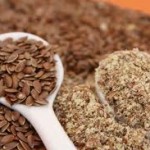
   Adding some to flax to your diet can be a great way to boost your omega-3 fatty acid intake.  Why is boosting your omega-3 fatty acid intake a good idea?  Omega-3 fatty acids fall into the category of “good” fats and a diet high in omega-3s has been linked to a lower risk for heart disease and possibly cancer. Flax can be used in the diet in either seed, meal, or oil form; the use and benefits will vary slightly depending on form chosen.

Seed:  When eaten as intact seeds, flaxseed largely pass through the GI tract undigested and serves more as a source of dietary fiber than omega-3s.  This is a different benefit to flaxseed but a benefit nonetheless.  Adding seeds to baked goods, oatmeal, or cooked vegetables are easy ways to incorporate them into your diet.

Meal:  When the seeds are ground into a meal, some of the fiber content is lost but this processing allows for the omega-3s to be available for absorption. Thus, flax in this form provides some fiber and some omega-3 benefits.   Flaxseed meal can be used as an egg replacement in baked goods.  To replace one whole egg,  mix 1 Tbsp meal with 3 Tbsp warm water.  Allow the mixture to sit for ten minutes to thicken slightly before use in the recipe.

Oil: In this form, all of the fiber has been removed and the oil is primarily a source of fatty acids.  Never cook with flaxseed oil; add the oil after foods have been heated or in cold dishes, such salad dressings.  Flaxseed oil can also be added to smoothies.

Food Bars

Saturday, January 7th, 2012

The grocery store can be confusing and exhausting these days, particularly when straying from the produce department or the health-conscious co-op.  To help navigate the aisles, I’ll give you my pick each week on a different type of food that might be purchased in a standard grocery store.  Keep in mind, a healthy diet is based predominantly on whole, natural foods.  My pick is your best bet among brand-name products, not necessarily the best thing to eat.  Also, review the ingredients list periodically on these foods because brands frequently change their recipes without notification.

Amy’s picks from food bars:

     Larabar

     Kind

     gnu Foods flavor&fiber

Why: Snack bars have evolved into the mainstream in a big way, far beyond their beginning as those flavorless protein bars eaten primarily by serious athletes.  When purchasing snack bars, it is important to first look at the ingredients – do you recognize many of the foods?  Is the bar a mix of whole, real, foods that you could purchase on their own?  Larabars, for example, are made from dried fruits and nuts and thats it.   Whole foods = good choice.  The last on the list, gnu Foods bars, do have some derived ingredients, such as inulin, chicory root, and wheat protein isolates.  The first two are manufactured fibers which aren’t as high on my list as naturally occurring fibers.  However, the overwhelming number of whole foods in the ingredient list compensated and helped this bar eek into third place.  Another thing to consider when purchasing these bars is the purpose of the bar – convenient snack or meal replacement.  The calorie content of food bars varies greatly and some can pack a hefty punch.  Don’t assume that smaller bars mean smaller caloric loads.  General rule of thumb is to keep snacks around 100 calories.  A third thing to consider is the sweeteners used in the bar.  “Yogurt” coatings are generally best to be avoided.  Be aware of the many names sweeteners can take in the ingredient list –  corn sweetener, corn syrup, dehydrated cane juice, dextrin, dextrose, fructose, fruit juice concentrate, glucose, high-fructose corn syrup, honey, invert sugar, lactose, maltodextrin, malt syrup, maltose, maple sugar, molasses, raw sugar, rice syrup, rice dextrins, saccharose, sorghum, sorghum syrup, sucrose, treacle, turbinado sugar, and xylose.  Shew.  That was exhausting.  It may be easier to grab a handful of almonds and call it square.

What’s Amy eating?

Friday, January 6th, 2012

Cheese Raviolli

Roasted Root Vegetables (acorn squash, shallots, butternut squash, apples, parsnips – cubed, tossed with fresh sage, olive oil, and a pinch of dark brown sugar, and roasted until tender)

Spinach salad

Leftover christmas cookies (these need to leave my house asap because they call my name, testing my ability to practice what I preach)

Getting juiced

Wednesday, January 4th, 2012

  In the spirit of Jamie Oliver’s Food Revolution, it’s time for a “did you know” about orange juice. Have you ever wondered how orange juice that according to the label is “fresh squeezed”, “100% pure” and “not from concentrate” can taste exactly the same bottle to bottle?  Certainly no two oranges have the same consistent taste. Turns out, that consistent flavor in most commercial orange juice is the result of a “secret flavor packet” that is not required by law to be listed on the label.

The making of orange juice goes more or less like this:  Once picked, oranges are shipped to be processed, i.e. squeezed and the juice pasteurized.  Then, the juice is either turned into frozen concentrate or put into storage tanks where it is held for up to a year.  During this time, much of the flavor and aroma is lost.  Therefore, when the juice leaves the storage tanks, manufacturers add a flavor pack before bottling, which is derived from orange byproducts.  Many premium orange juice brands, including Tropicana, Minute Maid, Simply Natural, and Florida Natural, have been using these packets for years to createtheir brand’s unique and consistent taste.

And now, I dub thee an informed consumer.