Warning: Declaration of WPRandomPostsWidget::update($new_instance) should be compatible with WP_Widget::update($new_instance, $old_instance) in /home/aquick7/public_html/wp-content/plugins/wp-random-posts/randomposts.php on line 79
A Quick Bite
 

Answering the question, why won’t my child eat vegetables?

Written by amy on February 24th, 2010

If you feel you are struggling to get your child to eat vegetables, ask yourself the following questions:

  1. Do I dislike vegetables and eat them no more than once a day?
  2. Does my child eat more than one serving of bread or milk at meals while vegetables remain untouched on the plate?
  3. Do I offer dessert as a reward for eating vegetables?
  4. Are vegetables offered less than twice a day?
  5. Do I tell my child how much of their food they have to eat?

Answering yes to any of the above questions may explain part of the problem.  To develop healthy eaters, it is best if parents choose which foods are offered and the child chooses if and how much they will eat.  Consistently offer vegetables throughout the day and let your child see you enjoying vegetables.  Remain as neutral as possible regarding the quantity of food they choose to eat.  When they request a second helping of bread or glass of milk/juice, encourage them to eat their first helping of vegetables if they are still hungry.

 

Mooooo

Written by amy on February 9th, 2010

All cow milk has roughly the same amount of calcium and protein.  The difference among types of cow milk is based upon the different amounts of fat in the milk.  Whole milk is milk that has nothing removed.  Its fat content is about 4% of its total content.  Two percent milk has roughly half as much fat as whole milk.  Similarly, 1% milk has half as much fat as 2% milk.  Nonfat milk has all of the fat removed and is also called skim milk, based upon the way the cream is “skimmed” off the top of the milk during production.

Children under the age of two need whole milk because the additional fat is needed for nerve and brain development.  However, older children and adults do not need the additional fat and would benefit in general from fewer calories and fat.  Thus it is recommended for the general population to gradually transition to 1% or nonfat milk after the age of two.  While 2% milk may sound much healthier than whole milk, it still contains the same amount of fat as in about 2 slices of bacon.  If your family hasn’t already made the transition, gradually begin working down towards 1% or nonfat milk.  To ease the transition, you can mix two grades of milk together, such as whole and 2% milk, and slowly increase the proportion of the lesser fat milk until your family’s tastes have adapted.


Avoiding tooth decay requires more than just brushing

Written by amy on February 1st, 2010

   Tooth decay, in the form of dental cavities or caries, is a common health problem, second in prevalence only to the common cold.  Most people understand that candy and soda are bad for teeth but do not realize that all carbohydrates foods play a role in tooth decay. 

All carbohydrates are not the same nutritionally but they all are made up of long chains of sugar.  Some carbohydrate foods, such as soda, candy, table sugar, and honey, are simple chains of sugar.  Other carbohydrates, such as grains, fruits, and milk products, are more complex chains and may contain additional nutrients. How are all carbohydrates related to tooth decay?  The bacteria living in plaque, the sticky film coating the outer surface of teeth, feed on sugar and when they do so, produce an acid which destroys the tooth.  Any carbohydrate that is left behind on the teeth can be food for the bacteria. 

Repeated productions of acid can increase the risk of dental caries because the tooth does not have time to recover.  Therefore, small amounts of carbohydrates eaten throughout the day are more damaging than large amounts eaten less frequently.   This spells bad news for kids because snack time is often a favorite time of day and crackers and fruit leather a major snack time preference. 

Bottom line: For happier teeth, steer your child away from constant snacking on carbohydrates throughout the day. Replace those carbohydrates with foods containing protein, which is not used by the bacteria.  Sorry Goldfish and fruit leather – the gig is up.


Happy bugs

Written by amy on January 26th, 2010

  Bacteria live naturally in our digestive tract as “defenders of the gut”, helping with nutrition, digestion, and immunity.  One recent trend in nutrition is to consume more bacteria in the diet to ramp up these activities in the gut, thereby promoting health.  The live microorganisms in the diet are termed probiotics.  Probiotics are found in fermented foods but in the US, these foods are limited and often do not contain live cultures in the final products.  The best source in the US for live and active cultures other than probiotic supplements is fermented dairy, such as kefir, yogurt, and cheese.  There are also many nutrition bars and drinks emerging on the market but their probiotic content and efficacy are unclear. 

Now for the two million dollar question – should I give my child probiotics?   Hard to say.  No two types, or strains, of bacteria have the same effect in the gut.  Thus, it is hard to determine which strain of bacteria at which dosage helps with which health issue.  One area that looks promising is antibiotic-induced diarrhea.  Antibiotics can eliminate all bacteria in the gut, both good and bad, frequently resulting in diarrhea.  Current research suggests that probiotics, taken anytime up to two months after antibiotic use, may help prevent this.   For infectious diarrhea, the kind that spreads like prairie fire through kids, the research is not quite as strong.  Probiotics may help decrease the duration of diarrhea by roughly one day.  For lactose intolerance, allergies, and certain diseases, research still needs more time to fully examine probiotics, including best strains, delivery, and dosages, especially for supplemental use of probiotics.    

Check out www.usprobiotics.org for more information.


Getting a leg up with some legumes

Written by amy on January 12th, 2010

Legumes, or beans, black-eyed peas, and lentils, are a dietary source of protein.  Similar to animal proteins such as meat, poultry and fish, these plant proteins also provide iron and zinc. In addition, because they come from plants, legumes are a great source of fiber, folate, and naturally cholesterol-free.

White Bean Burgers

1 can (15-16 oz) great northern beans, drained

1 can (4 oz) chopped green chiles, undrained

2 medium green onions, chopped

1 cup plain dry bread crumbs

1 egg, beaten

¼ cup yellow cornmeal

2 tbsp vegetable oil

Slices of cheese (such as Monterey Jack and Provolone)

Mash beans in a bowl.  Mix in chiles, onions, breadcrumbs and eggs.  Shape into 4-5 patties.  Coat each patty with cornmeal.

Heat oil in large skillet over medium heat.  Cook patties in oil around 8-10 minutes, turning at least once until crisp on both sides.

Top with cheese slices and cover until cheese is melted.


Pomegranates – superhero in the world of food

Written by amy on December 15th, 2009

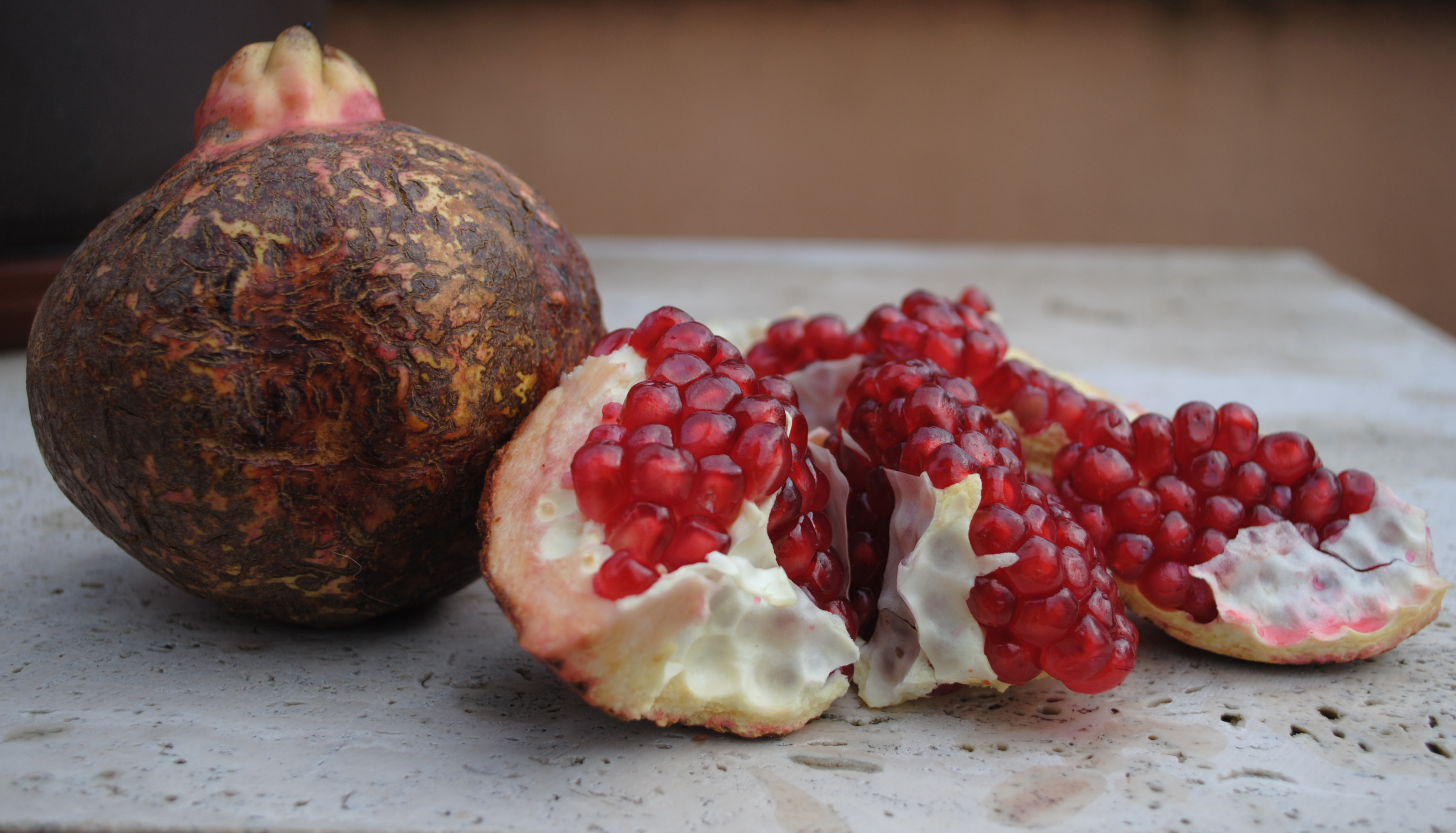
Pomegranates are in season and with a potent antioxidant concentration, they have bumped up the food chain to superfood status.  Many people hesitate to buy pomegranates because they aren’t sure how to pick and eat them.

First, cut off the crown and then cut the fruit into sections.  Place the sections in a bowl of water and then roll out the red juice sacs with your fingers.  Remove any of the white-colored pulp membrane that may be stuck to the juice sacs.  Strain out the water and eat the juice sacs whole, seeds and all.  Keep in mind that the juice can stain clothes skin, and some countertops.   

Pomegranates can be eaten as is or used as a garnish on sweet and savory dishes like yogurt, pancakes, grilled fish, or couscous.   Add a handful of seeds for a colorful new flavor to garden salads.   Pomegranate juice is also becoming more widely available in grocery stores. 

Enjoy these fruits before the season ends!


Does vitamin C work at preventing colds??

Written by amy on December 9th, 2009

The arrival of clementines in the grocery store easily marks the start of the winter season.  Clementines, those juicy miniature oranges, make a terrific snack as they are easy to pack, easy to peel, and full of vitamin C. 

Vitamin C is needed for normal growth and development.  It helps in the repair and maintenance of teeth, bones, cartilage, muscle and blood vessels, aids in the absorption of iron, and is needed for wound healing.  Thus, signs of a vitamin C deficiency, which is also known as scurvy (listen up all you pirates out there), are dry and splitting hair, inflamed or bleeding gums, rough, dry, or scaly skin, poor wound healing, nosebleeds, and tooth decay.  Being a water soluble, vitamin C can not be stored by body and unused amounts of the vitamin leave the body through urine.  Therefore, a daily supply of vitamin C is needed in the diet.  All fruits and vegetables, particularly citrus fruits, are major sources of vitamin C. 

Now, for the question on the minds of everyone in the midst of a roaring cold and flu season – does a large dose of vitamin C prevent or treat the common cold?  At least 30 major clinical trials have been conducted to examine the effectiveness of vitamin C supplementation at preventing and/or treating colds but to date, none have proven a significant effect.  So, while clementines sure are tasty to eat, they and other vitamin C sources have nothing on good old hand-washing for keeping colds and flu at bay.


The soda number crunch

Written by amy on November 1st, 2009

1 12 oz can of regular soda = 10 teaspoons of sugar

10 teaspoons of sugar = 40 grams of sugar

40 grams of sugar = 160 calories

3500 calories = 1 pound of fat

16.64 pounds = the number of pounds of body fat gained if one soda is drank every day in addition to your daily caloric need


Treats for the Trick-or-treaters

Written by amy on October 27th, 2009

If you are in search of some Halloween treat alternatives, try the non-food route. Recent research shows that, given a choice between treats and toys, kids will often prefer the toys.

Here’s a list of Halloween toy ideas:

Temporary tattoos

Stickers

Small plastic spider rings

Super balls

Plastic or wax fangs

Bracelets and rings

Hair accessories like barrettes, hair ties and bows

Spinning tops

Plastic animals and characters

Colored shoelaces

Coloring books

Key rings

Magnets

Whistles

Bubbles

Noisemakers like kazoos


Gimme five – fruits and vegetables, that is

Written by amy on September 29th, 2009

Research continues to show that fruits and vegetables are critical in promoting good health.  However, only 31% of Vermonters, surveyed in 2007 by the Center for Disease Control, were eating the recommended five servings per day of fruits and vegetables.  That’s better than the national average of 11% but far from ideal. 

Here are ten easy tips to help them (and you) reach at least five fruits and vegetables a day:

1.  Sprinkle a few berries or sliced bananas on breakfast cereal, waffles, pancakes, or oatmeal.  Canned pumpkin or applesauce are also great stirred into oatmeal.

2.  Puree fruit and add to plain yogurt to create a healthier fruited yogurt. 

3.  Add diced peppers and mushrooms to scrambled eggs.

4.  Stash dried fruit in the pantry.  It comes in handy when fresh fruit isn’t an option and there are many different dried fruits from which to choose.  Place a box of raisins in your child’s backpack.

5.  Top a vegetable salad with chopped apple, dried raisins, or cranberries.

6.  Bump up store bough marinara sauce by adding vegetables such as squash, zucchini, carrots, or canned tomatoes. 

7.  Keep sliced carrots and celery in a glass of water in the fridge for a quick grab at snacktime.

8.  Add lettuce, tomato, and cucumber to sandwiches.

9.  Try to fill half of your plate with vegetables at lunch and dinner.

10. Turn it into a friendly family competition.  At dinnertime, have everyone tally up their intake for the day and see who has eaten the most fruits and vegetables.  Give a high five to everyone who has hit their five for the day.