
Warning: Declaration of WPRandomPostsWidget::update($new_instance) should be compatible with WP_Widget::update($new_instance, $old_instance) in /home/aquick7/public_html/wp-content/plugins/wp-random-posts/randomposts.php on line 79
A Quick Bite » 2012 » March
 

March, 2012

...now browsing by month


What’s in your Easter basket?

Saturday, March 31st, 2012

  This quick bite is dedicated to those who celebrate Easter, a holiday that is rapidly approaching.  Like so many holidays before it (Halloween, Christmas, Valentine’s Day, etc), Easter has become another holiday accosted by the candy industry.   Keeping in mind that moderation is one of the keys to good nutrition, here are a few ideas to displace some of the candy in Easter baskets. 

Egg fillers:

  • Dried Friut
  • Small accessories, such as hair bands, barrettes, or earrings
  • Stickers
  • Tattoos
  • Interesting shells or stones
  • Marbles
  • Homemade “coupons” for items such as a itunes song
  • Bouncy balls
  • Golden dollars or other small change
  • Homemade playdough (Bonus* place several dough cookie cutters into baskets)

Basket fillers:

  • Small potted plant
  • Flower or seed packet
  • Sidewalk chalk
  • Jump Rope
  • Coin collection book (bonus* put coins into eggs)
  • Rolled up colorful socks
  • Nail polish
  • Harmonicas, kazoos
  • Playing cards
  • Stationary or pencil sets
  • Disposable camera


What’s Amy eating?

Friday, March 30th, 2012

My kids are not fans of fish.  That still doesn’t keep me from serving them twice a week for dinner.  Fish are a great lean protein and  source of the fats that make your heart happy, omega-3 fatty acids.  To help bring  my kids from the land of “I don’t like fish” to the land of “I like fish”, tonight, I made fish sticks for dinner.  The breading, size, and ability to pick them up with their fingers for dipping, make these kid-friendly.  This homemade version is also much healthier than the frozen fish sticks found in the grocery store.  And, the sticks were pretty quick to prepare and easy enough that my 8 year old was able to do it all by herself.

Tonight’s dinner:

Corn-flake crusted halibut

Tossed salad – spinach, carrots, red bell pepper, and fresh dill

Sliced plums

Girl Scout cookie

What’s Amy eating?

Thursday, March 22nd, 2012

Still 70+ degrees, still grillin’.

Grilled portabello mushrooms ( marinated in 1/4 cup low sodium soy sauce, 1/4 cup balsamic vinegar, 3 tbsp olive oil, and fresh garlic)

Garden salad of greens, fresh dill, carrots, red bell pepper, cauliflower, and broccoli

Bean, corn, and quinoa salad (Saute’ 1 onion and garlic in canola oil until lightly browned.  Add 3/4 cup quinoa, 1 tsp cumin,  cayenne pepper to taste, and 1 1/2 cup vegetable broth.  Bring to a boil and then cover and simmer 20 minutes.  Add 2 cans of black beans (drained and rinsed) and 1 cup frozen corn.  Heat until warmed through.  Add 1/2 cup chopped fresh cilantro. Serve warm or chilled.)

Strawberries and grapes

What’s Amy eating?

Monday, March 19th, 2012

75 degrees in Vermont in March?  What?!  This means trouble for the ski season but it sounds good for all those who, like my carnivorous husband, are looking forward to the coming season – grill season.  Tonight was the first grill night of the year.

Grilled salmon filets and marinated boneless, skinless chicken tenders

Boiled red potatoes tossed with fresh dill

Roasted broccoli and cauliflower

Applesauce

Chocolate chip cheesecake topped with fresh strawberries

Happy Gut Bugs

Monday, March 19th, 2012

   The importance of a healthy balance of bacteria and yeasts in the digestive tract has been well documented by evidence-based reviews. This balance can help support the immune system as well as decrease inflammation in the gut, possibly helping with conditions such as cancer, irritable bowel disease, gastroenteritis, and diarrhea. 

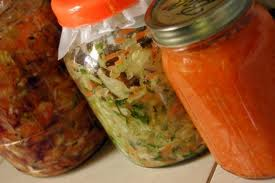
 One popular strategy for creating this balance is through the use of supplemental probiotics, taken in a pill form.  However, there is a second strategy that is less trendy despite long being celebrated by cultures throughout history and across the globe. Naturally fermented foods are dietary sources of live active cultures and including these regularly in the diet can reap more benefits than can be obtained through a supplemental, single strain of probiotics.  Fermented dairy foods, such as yogurt and cheese, are well known choices.  Fruits and vegetables, such as kimchi, chutneys and sauerkraut, may be less common in American cuisine but offer tasty options as well. 


Kimchi

1 head Napa  cabbage, cored and shredded

1 bunch spring onions, chopped

1 cup carrots, grated

½ cup daikon radish, grated (optional)

1 Tbsp freshly grated ginger

3 cloves garlic, peeled and minced

½ tsp dried chili flakes

1 tsp sea salt

4 Tbsp whey (if not available, use an additional 1 Tbsp salt)

Place all ingredients in a bowl and pound with a wooden mallet or meat hammer to release juices.  Place in a quart-sized, wide-mouthed mason jar and press down firmly with the mallet or hammer until juices come to the top of the cabbage.  The top of the vegetables should be at least 1 inch below the top of the jar.  Cover tightly and keep at room temperature for about 3 days before transferring to cold storage.

Source: Nourishing Traditions by Sally Fallon

Cuckoo for coconuts?

Tuesday, March 6th, 2012

     Coconut water, the clear juice found inside young coconuts, is one of the latest American health crazes. Should everyone be drinking it?

Coconut water does not contain any fat or cholesterol and is low in calorie – all three of which land coconut water smack dab in three big nutrition trends right now.  This explains some of the hype around coconut water. Coconut water does contain water, a little carbohydrate, a little sodium, and a lot of potassium. It is largely this high potassium content that is responsible for the rest of the hype.

Research shows that adequate potassium in the diet is essential for health.  However, potassium is also found in fruits and vegetables, which most people aren’t getting enough of.  Relying solely on coconut water as a source of potassium is not recommended because it will not provide the additional nutrients that can be obtained through fruits and vegetables.

Is this potassium content a huge benefit after exercise, as claimed by coconut water manufacturers? First, most people don’t exercise heavily enough to need an electrolyte replacement drink and would be fine with plain
water.  For those exercising strenuously, electrolytes are lost through sweat and replacing these would be beneficial.  However, the ratio of sodium to potassium in coconut water is not ideal for replenishing stores.  Coconut water has a lot of potassium and a little sodium and this is the opposite of what is needed after a hard workout.

On a side note, coconut oil, long recommended against due to its saturated fat content, may not be unhealthy as originally believed. The latest evidence shows that in the short-term, virgin coconut oil doesn’t have
the same harmful effects on cholesterol levels as other saturated fats.  It doesn’t seem to improve cholesterol levels as well as other plant oils, such as olive and canola oils, but it is no longer thought necessary to avoid coconut oil altogether.

Bottom line: Coconut water is not a miracle cure (because there isn’t one) nor should it be used as a water replacement; however, if the 3+ bucks a pop price tag doesn’t faze you, coconut water may be a refreshing
and nutritious beverage choice for you. If you are a heavy sweater and want to replenish your electrolytes after a heavy workout, grab a handful of pretzels and a bottle of water.  Stay tuned for
more research about coconut oil.  As always, moderation and mindful eating are always successful strategies for a healthy diet.


What’s Amy eating?

Tuesday, March 6th, 2012

Homemade Bean Burgers on  a whole wheat bun (recipe makes 8 so I froze 4 to use for dinner on another night)

Roasted Root Vegetables (Cubed apples, shallots, butternut squash, sweet potatoes, carrots, and idaho potatoes tossed with fresh sage, olive oil, pepper, and touch of dark brown sugar and then roasted until tender)

Green salad of spinach, carrots, and red bell peppers

Sliced apples

Ice Cream