
Warning: Declaration of WPRandomPostsWidget::update($new_instance) should be compatible with WP_Widget::update($new_instance, $old_instance) in /home/aquick7/public_html/wp-content/plugins/wp-random-posts/randomposts.php on line 79
A Quick Bite » 2013 » March
 

March, 2013

...now browsing by month


Naturally misleading

Wednesday, March 27th, 2013

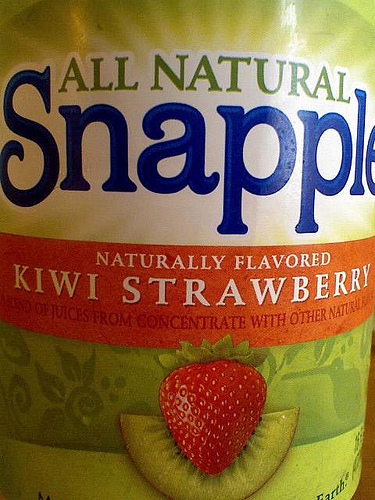
  According to marketing research, the term most commonly searched for on food labels by consumers is “100 percent natural.” Food manufacturers recognized the selling power of this term and as of 2008, “all-natural” was the second most used claim on American food products.  A close look at some of these “natural” foods though reveals that many contain high fructose corn syrup, pesticides, antibiotics, and growth hormones – all seemingly “unnatural” substances.  What does “natural” mean exactly on a food label?

It turns out that “natural” means different things to different governing agencies.  The USDA, who regulates the labeling on meat and poultry, allows a product to be called “natural” if it contains “no artificial ingredients or added color and is only minimally processed”.  Translate this to the following: nothing should have happened to the meat between the slaughterhouse and the supermarket but anything goes for what happened to the animal before slaughter, such as what the animal was fed, whether it was given growth hormones or antibiotics, etc.  Of note, some products, such as poultry, can still be labeled “natural” even after being injected after slaughter with water and sodium to create a more plump, “eat me” appearance.

The FDA regulates labeling on non-meat products and does not give a legal definition for “natural”.  According to the FDA, there is no true definition for what makes a food “natural” but the agency does not object to the use of the term if the food does not contain added colors, artificial flavors, or synthetic substances.  This opens the door for all kinds of rule bending and definition stretching, as is the case with high fructose corn syrup.

Bottom line: Many consumers equate “healthy” with “natural” but loose guideline around the term “natural” can mislead many consumers into purchasing “unhealthy” foods. Don’t just buy a food because it claims to be “natural”.  Read the ingredient list and try to buys foods that contain ingredients that you might find in your own pantry.
Grains

Wednesday, March 20th, 2013

Any whole grain is going to be a better pick than a refined grain so this list may be a bit like splitting hairs (or splitting grains as in this case). That being said, when looking at the nutrients commonly found in grains – fiber, magnesium, B-6, iron, and zinc, there are a few grains that far outshine the others. 

 Amy’s top picks:

      Quinoa

      Buckwheat Groats

      Bulgur

What would be at the bottom, you might ask?  Some of the grains that contain the least amount of nutrients, in decreasing order, are:  couscous, white rice, soba noodles, and corn grits.

Get Keen on Quinoa

Wednesday, March 20th, 2013

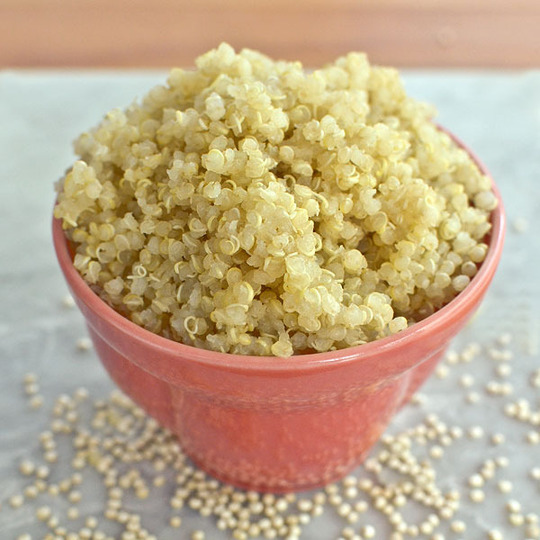
  Quinoa (pronounced keen-WAH) – say it loud and proud because it is one of those superhero whole grains that should be a weekly feature on your family’s plate.  Folate, phosphorus, fiber, unsaturated fats are some of the key nutrients found in quinoa. And, as the only grain that contains every essential amino acid, quinoa offers all the protein but none of the cholesterol that is found in animal proteins.  Take that, carnivores.

 Quinoa Patties (from epicurious)

2 ½ cups cooked quinoa, at room temperature *

4 large eggs, beaten

½ tsp sea salt

1/3 cup chopped fresh chives

1 onion, finely chopped

1/3 cup freshly grated Parmesan or Gruyere cheese

3 cloves garlic, finely chopped

1 cup whole grain bread crumbs

1 tbsp olive oil or clarified butter

Combine the quinoa, eggs, and salt in a bowl.  Stir in the chives, onion, cheese, and garlic. Add the bread crumbs, stir, and let sit for a few minutes to allow the bread crumbs to soak up some of the moisture.  Form the mixture into patties. Add a bit more bread crumbs if mixture is too dry OR add a bit of water or beaten egg if the mixture is too moist. (Mixture can be made ahead and kept in refrigerator until ready to cook)

Heat the oil in a large skillet over medium-low heat.  Add as many patties as will fit in skillet without touching, cover, and cook for 7 to 10 minutes until the bottoms are deeply browned.  Turn up the heat if there is no browning after 10 minutes and continue to cook until browned.  Flip the patties and cook an additional 7 minutes or until golden. Remove and serve. 

*To cook quinoa: 1 cup of dry quinoa will yield about 3 cups of cooked quinoa.  To prepare, first rinse the quinoa is a strainer.  Then add 1 cup quinoa to 2 cups water and bring to a boil.  Cover and cook until liquid absorbed and quinoa tender, about 15 minutes.  Let stand an additional 5 minutes, covered and off the burner.


Holy toxic rice, Batman.

Monday, March 11th, 2013

  It has been a few months since Consumer Reports released a surprising study that found potentially dangerous levels of arsenic in domestic rice and rice products. Currently, rice is not held to enforced arsenic standards as exist for arsenic in water and so Consumer Reports, in their issue, called on the Food and Drug Administration (FDA) to act.  In response, the FDA has commissioned a study to determine if more stringent restrictions are needed.  Results from this study can be expected this year and early results have confirmed arsenic levels similar to those cited by Consumer Reports.

Of importance is the type of arsenic being found in these foods.  There are two forms of arsenic, organic and inorganic. Although there is health concern for each type, inorganic arsenic is considered the most harmful and is classified as a Group 1 carcinogen by the International Agency for Research on Cancer, a division of the World Health Organization.  Long term exposure to Group 1 carcinogens are associated with higher rates of
cancer.

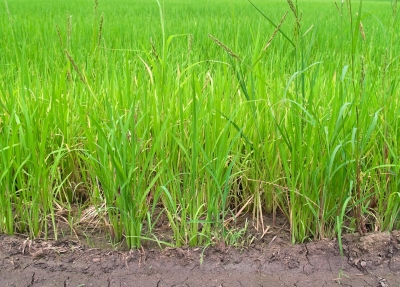
The origin of rice appears to be a major factor in the amount of arsenic it contains.  Rice is grown in flooded areas and will absorb compounds from soil and water, including arsenic if it is present.  The majority
of rice grown in the United   States is grown in the south-central part of the country.  In this area, there are high levels of inorganic arsenic in the soil due to historically widespread use of pesticides and fertilizers on cotton farms.

Rice safety is especially important for anyone following a diet in which rice is a staple, such as the traditional Asian, Latin diet, or gluten-free diet.  At this time, the FDA does not suggest changing your consumption of rice but rather to expand your grain intake to include a wider variety of grains. Many health experts suggest otherwise. To err on the safe side until larger, widespread studies are conducted, follow these suggestions to lower your risk:

  • Limit weekly intake of rice to less than 1 cup for kids, less than 11 ½ cups for adults
  • Choose rice wisely.  Imported basmati and jasmine rice have been found to have lower arsenic levels than rice grown in the US.  If purchasing brown rice, choose rice grown in California or India which has also been shown to have lower levels of arsenic.
  • Cook and drain rice like pasta.  Cook rice in more water than usual and then drain off extra water when rice is done.
  • Rinse rice 4 to 6 times prior to cooking, provided your town’s water level is not high in arsenic.
  • Consider switching your child from rice milk and limit infant rice cereal to ¼ cup per day.

What’s Amy eating?

Monday, March 11th, 2013

This entire meal can be cooked on the same rimmed cookie sheet.  Good night to volunteer for after-dinner dish duty!

Tonight’s menu:

Teriyaki Salmon

Roasted shiitake mushrooms

Roasted brussel sprouts

Roasted fingerling potatoes

Fruit salad of grapes and chopped pluots


To make on one pan, first toss potatoes in a little oil and start roasting at 425 degrees.  While these are cooking, combine teriyaki sauce with a little sesame oil, rice vinegar, honey, minced ginger, and minced garlic. Spread a few tablespoons of marinade over salmon and set aside. Toss brussel sprouts in oil and minced garlic. Toss sliced mushrooms in oil and minced garlic in separate bowl.

After about 15 minutes, add brussels to pan in oven and increase heat to 450. Once brussels are lightly browned, about 5 minutes later, gather brussels into a group and place salmon on top. Spread mushrooms around salmon.  Cook about 8 to 10 minutes until all is done. Drizzle remaining marinade on top and serve.